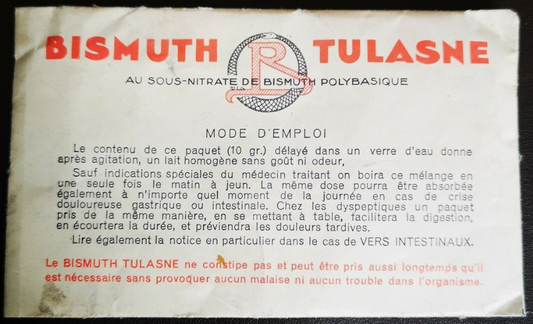
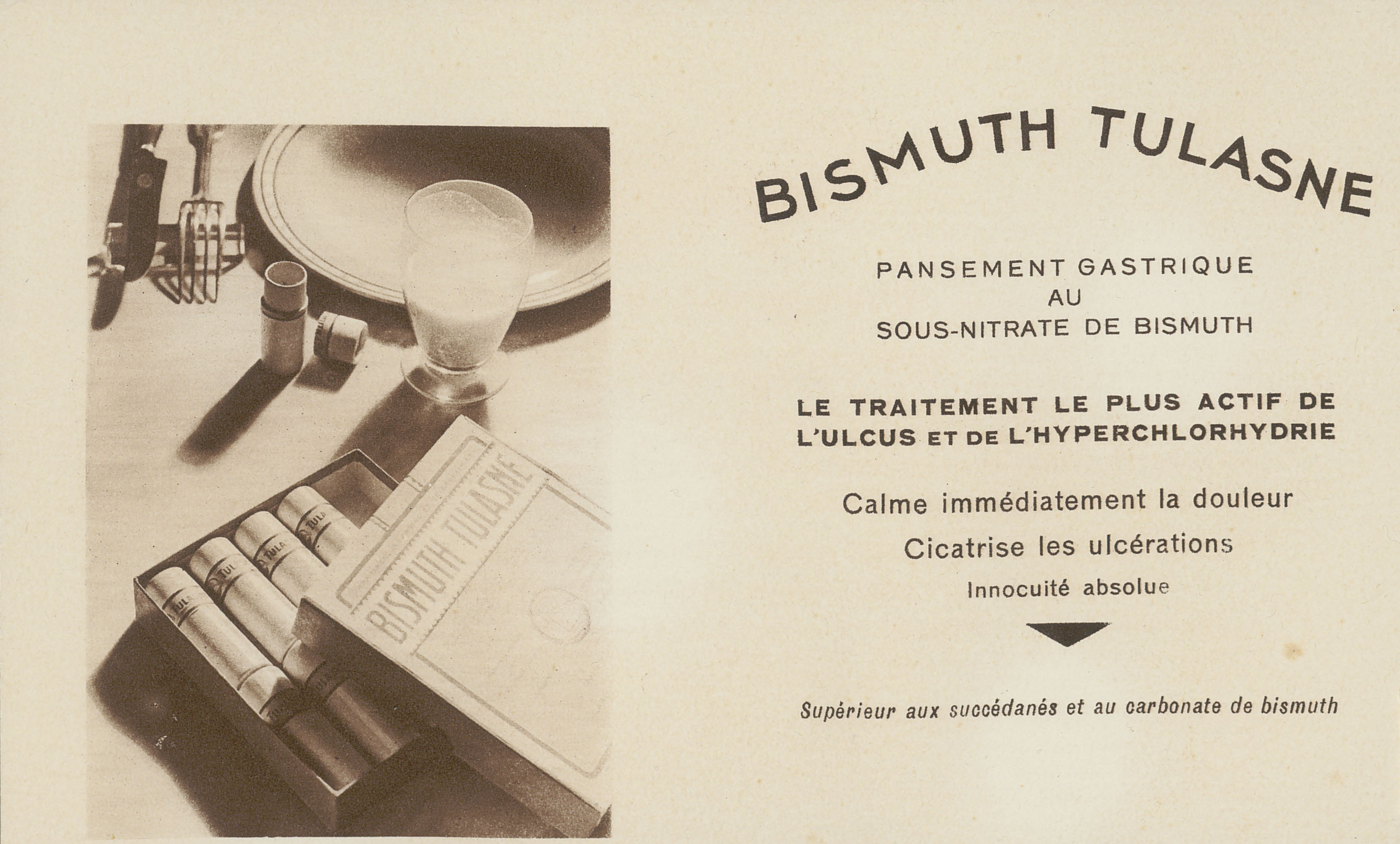
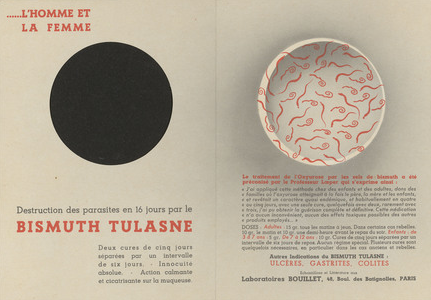
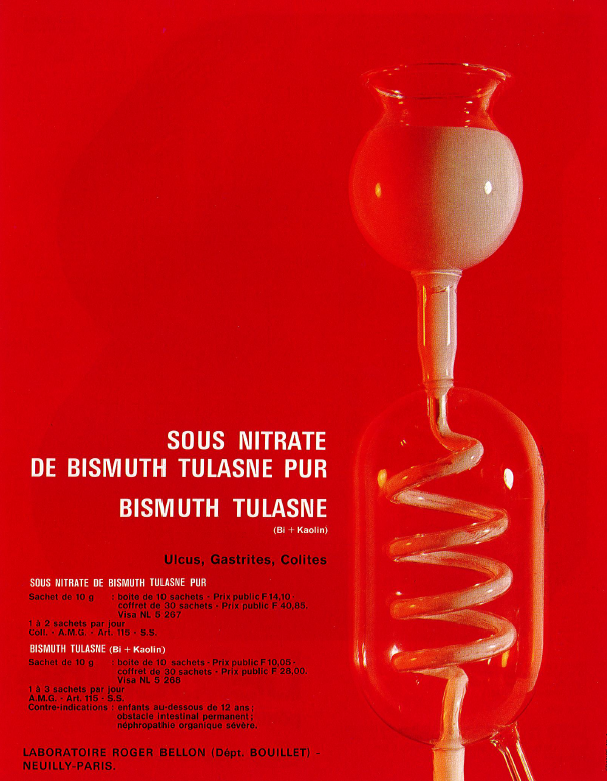
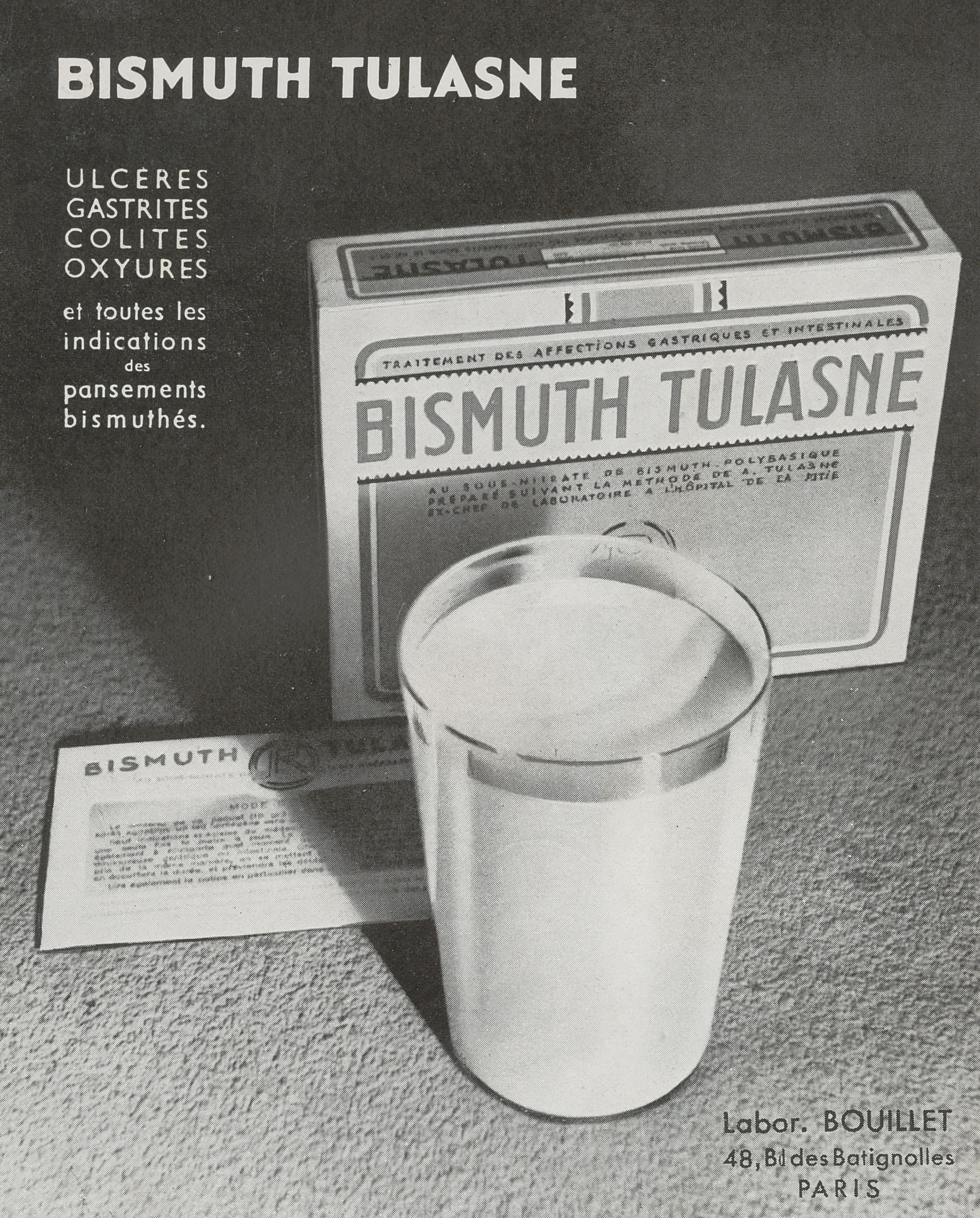
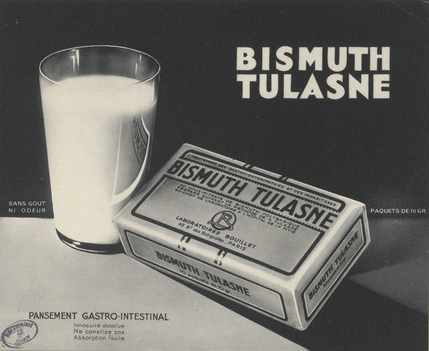
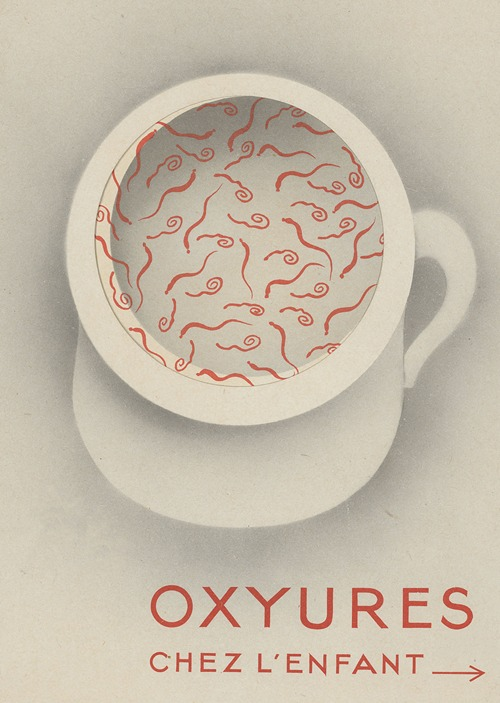
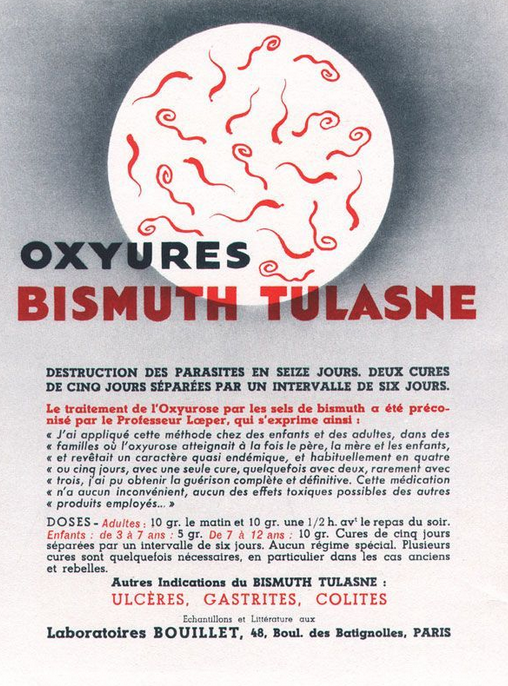
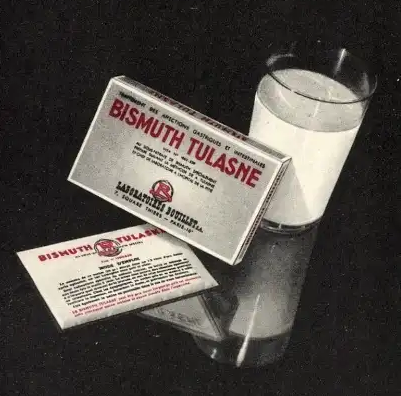
This oral drug commercialized by Labotarory Roger Bellon in the 1970s was initially developed by Laboratoires Bouillet (Paris, France) in the 1950s. The drug was used to treat ulcers, gastritis and colitis. It contained bismuth subnitrate (Bi5O(OH)9(NO3)4), also known as Bismuth(III) oxynitrate (or bismuthyl nitrate). This product is known for a long time as a gastro-protective agent, essentially used for the treatment of duodenal ulcers (induced by the bacterium Helicobacter pylori) and as an anti-diarrheic agent. The Bismuth agent binds to and disrupts the cell wall/glycocalyx of H. pylori, producing a direct bactericidal effect and increasing the permeability of the bacterial cell wall to other antibiotics. Bismuth Tulasne has been used also to treat infection by the nematode Enterobius vermicularis (pinworm). This worm is a common human nematode, primarily inhabiting the gastrointestinal tract and mostly affecting children. Bismuth Tulasne has been be used to combat Enterobiasis, but the product was essentially recommended to treat H. pylori-related infections.
In the case of Bismuth Tulasne®, the bismuth molecule was combined with kaolin which exhibits a high adsorptive capacity. Kaolin is a layered silicate mineral (Al2Si2O5(OH)4) acting as an adsorbant for bismuth and as a protective agent. This non-nutritive mineral material has intrinsic medicinal properties. It facilitates restauration of physiological functions during stress recovery. The drug is no longer used today.
>
>