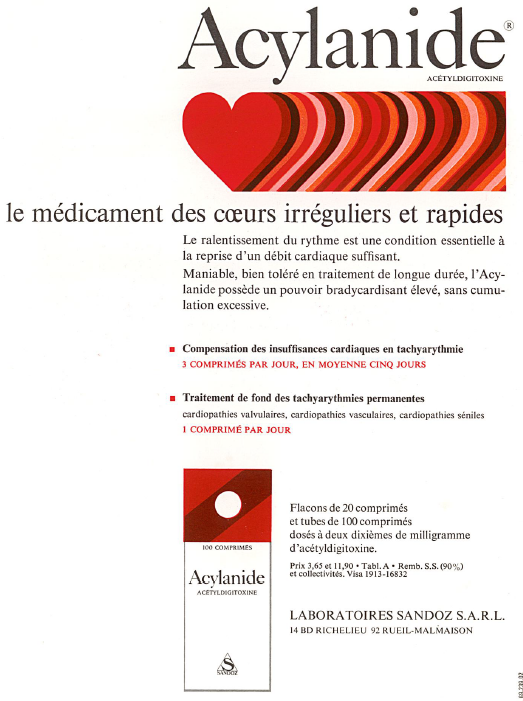
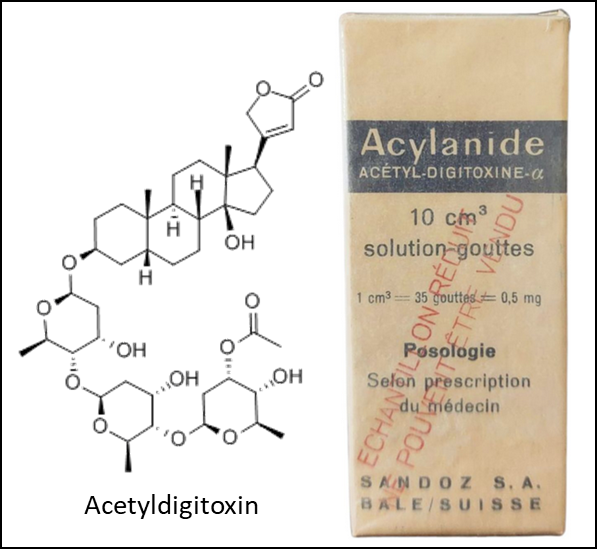
The active principle of acylanide®, the cardiac glycoside acetyldigitoxin, is used for a long time for the treatment of congestive heart failure. Acetyldigitoxin functions as a potent inhibitor of the Na+/K+ ATPase pump located in the membranes of heart cells (IC50 = 5 nM). The binding of the drug to the α-subunit of the membrane Na+/K+ ATPase pump causes an increase of sodium ions level in the myocytes, which then leads to a rise in the level of calcium ions. Acetyldigitoxin also increases vagal activity via its central action on the central nervous system, thus decreasing the conduction of electrical impulses through the atrioventricular node. This is important for its clinical use in different arrhythmias.
Acetyldigitoxin is a natural product found in the leaves of Digitalis plant species, notably in the toxic species Digitalis lanata better known as « woolly foxglove » which produces different cardenolides. It can be also isolated directly from other Digitalis species, such as D. mertonensis and D. purpurea. This orally-active drug is well-absorbed and fairly rapidly excreted. It is a potent and rapid-acting drug to reduce the heart rate. It is often used to treat cardiac failure with tachycardia, notably auricular fibrillation and other forms of arhythmia. The effect of acetyldigitoxin is more quickly reversible than that of digitoxin and therefore treatment with acetyl-digitoxin can be more easily controlled. Today, acetyldigitoxin remains an FDA-approved drug (2009) used to treat patients with atrial fibrillation and atrial flutter with rapid ventricular response.