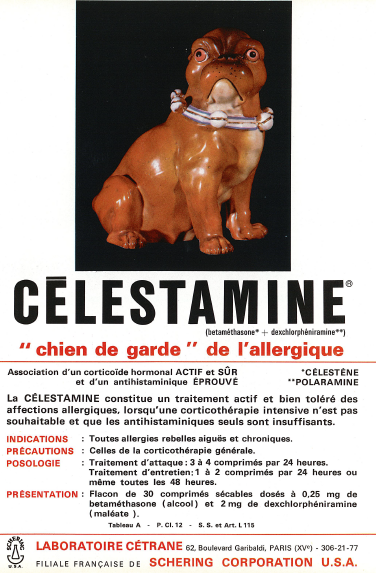
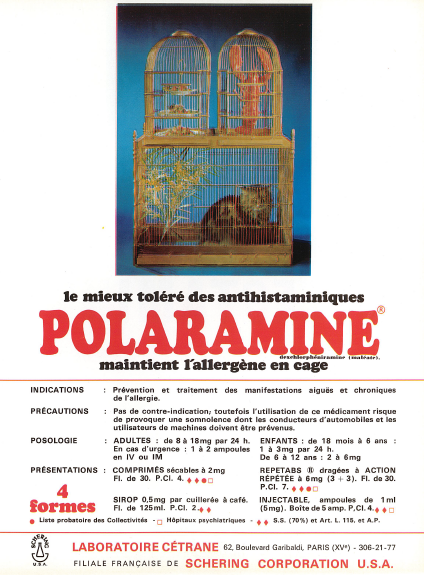
The drug Polaramine was used to prevent and to treat acute and chronic allergy. It contained a single active ingredient: dexchlorpheniramine maleate. Another drug designated Célestamine contained the same active ingredient in addition to the corticosteroid betamethasone. This latter product was essentially used to treat allergic rhinitis. Dexchlorpheniramine is an antihistamine, acting a histamine H(1) receptor antagonist. By blocking the receptor sites, the drug prevents histamine from exerting its effects on target cells. Consequently, the typical symptoms associated with histamine release, such as vasodilation, increased vascular permeability, and stimulation of sensory nerves, are significantly reduced. Different formulations of polaramine were available: tablets, coated tablets, sirup, and an injectable liquid form in ampules, with various dosages. It is a classical, first generation antihistamine belonging to the ethanolamine group. The drug is used to relieve symptoms associated with allergic rhinitis (including hayfever), such as sneezing, runny or itchy nose and burning or itchy eyes. It may also be used to relieve symptoms associated with chronic urticaria (hives). The drug is efficient but it can cause side effects, notably dry mouth, drowsiness, and dizziness (and possibly urinary retention). The drug is still used today.
.
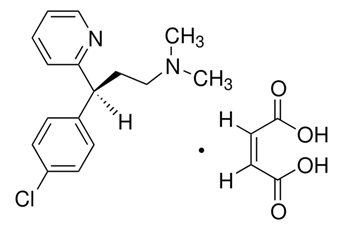
Dexchlorpheniramine maleate