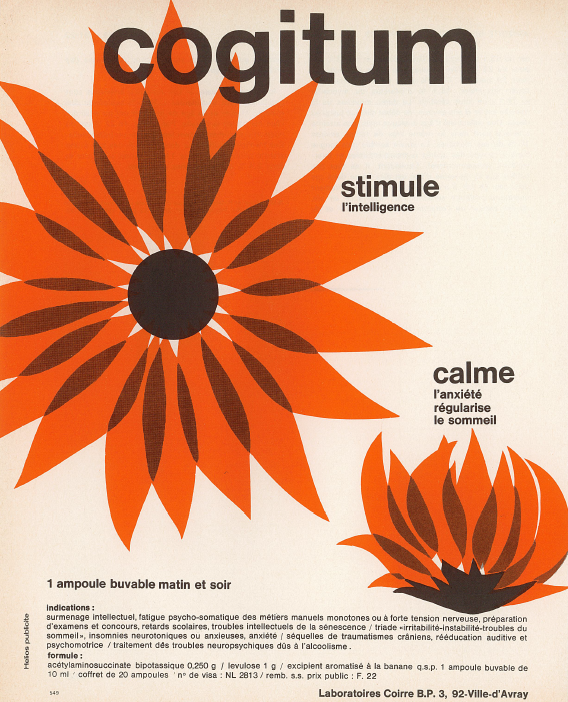
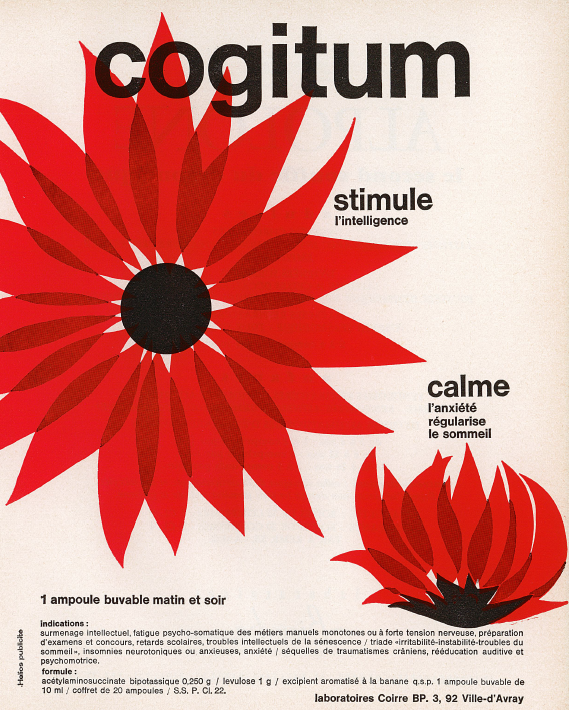
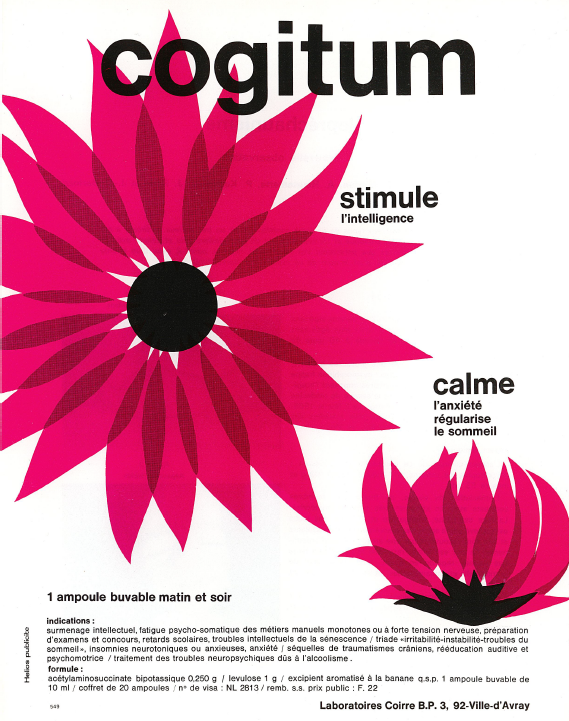
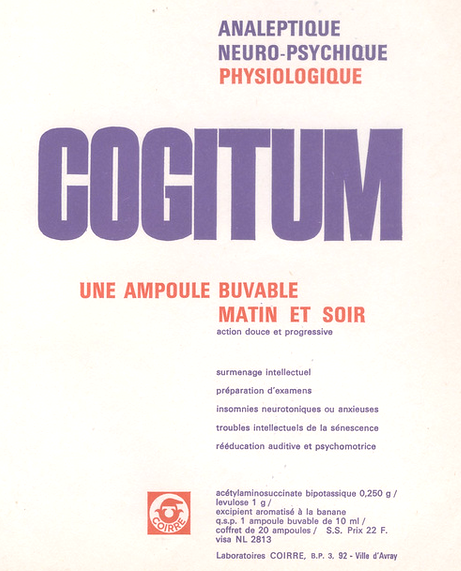
The drug Cogitum® was developed in the 1970s for the treatment of intellectual troubles, notably those associated with senescence in elderly patients, but also to treat mild memory deficit in young children. The drug was used also to treat anxiety and various forms of psychomotor deficits, neuropsychic troubles. This oral drug (in drinkable ampules) was viewed as an aid for concentration, and to combat intellectual fatigue (asthenia). It is a nootropic agent (metabolic corrector) recommended to boost cerebral, intellectual capacities. It is still used today as a dietary supplement. This well-tolerated drug is considered of interest in pediatric neuropsychiatry to treat mild autistic disorders, and to alleviate attention deficit hyperactivity disorders (ADHD) manifestations in children.
The active principle of Cogitum® is dipotassium N-acetylaminosuccinate, a synthetic analog of N-acetylaspartate (NAA) which can be found in the brain. NAA is a derivative of the amino acid aspartic acid (Asp) which is essential for hormonal regulation and brain development. N-acetylaminosuccinate has been considered as a psychoenergizer but it is rarely used today. There are other active ingredients to enhance cognitive functions.