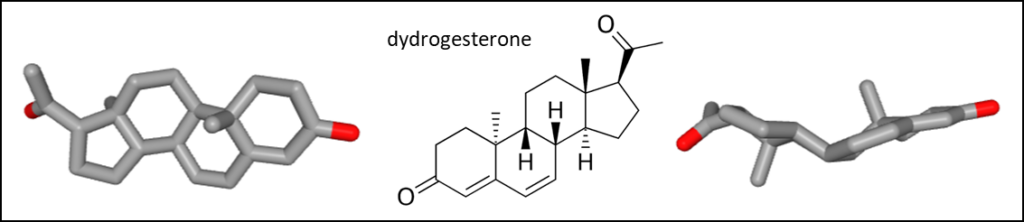
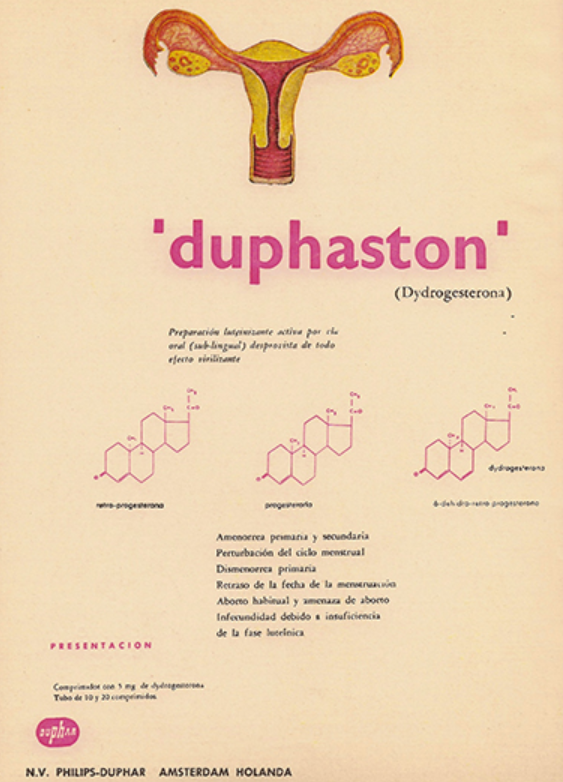
This drug contained a progesterone derivative known as dydrogesterone and was used for the treatment of menstrual disorders in women (dysmenorrhea). Dydrogesterone is an orally active synthetic progestogen, structurally close to progesterone. At a low dose (5mg tablet/day), dydrogesterone does not inhibit ovulation. The active principle is indicated in younger women for treatment of dysmenorrhea, irregular menstrual cycles, premenstrual syndrome, and threatened or recurrent miscarriage.1 Mechanistically, the drug functions as a selective activator of progesterone receptors but it has no relevant androgenic, estrogenic, glucocorticoid or mineralocorticoid activities. The drug is useful to treat conditions related to progesterone deficiency, notably dysmenorrhea (painful periods) and amenorrhea (absence of periods). The drug is effective in the treatment of endometriosis-associated pelvic pain without causing suppression of ovulation. Dydrogesterone, used for over 50 years, is considered as safe and efficacious in women. It is still largely used today to control endometriotic lesions.
1 Stute. 2021;37:683

.