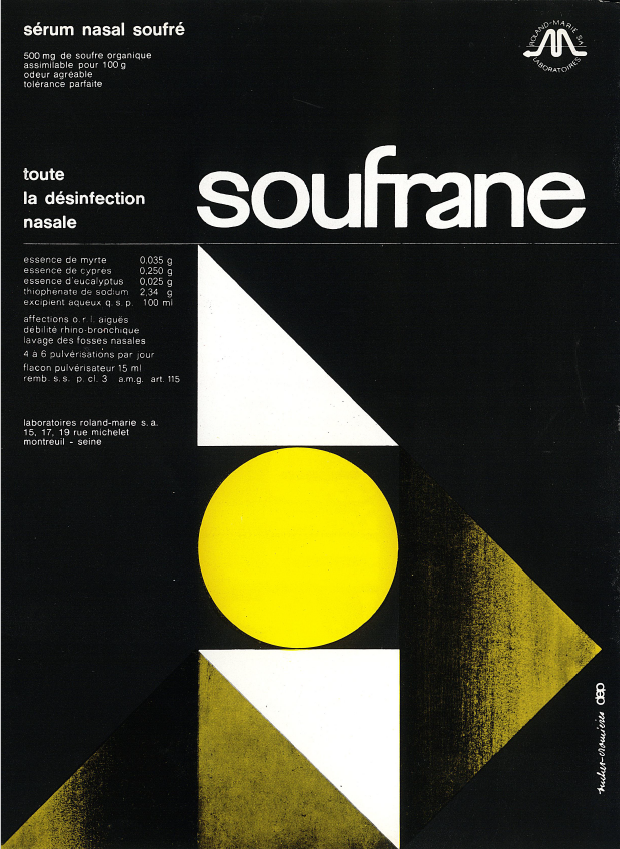
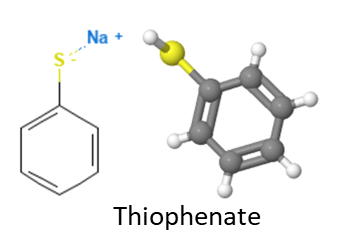
The nasal spray Soufrane was essentially used to treat respiratory insufficiency and acute Ear Nose Throat (ENT) infections. It contained sodium thiophenate (also known as benzenethiol, thiophenol, or mercaptobenzene) and essential oils of eucalyptus, myrtle, and cypress. The original Soufrane drug is no longer commercialized. But a modern version of Soufrane has been developed. It contains sodium 2-thiophenecarboxylate instead of thiophenate, and it is used to treat rhinopharyngitis. The mode of action of thiophenate is not clear but it may involve inhibition of tyrosinase, combined with inhibition of bacterial growth with the essential oils. In particular, the essential oil from cypress (Cupressus sempervirens L.) contains volatile components (δ-3-carene, δ-limonene, β-pinene, β-myrcene) active against a range of bacteria, including Staphylococcus aureus, Bacillus subtilis, and B. cereus.